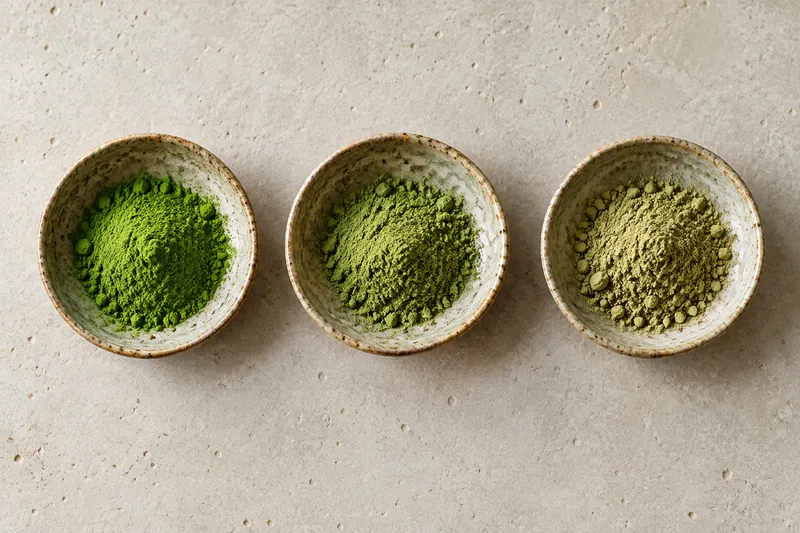
Almost every shop labels its matcha "ceremonial grade", "premium grade" or "culinary grade". What few people know is that no authority in Japan defines these grades at all. This guide shows you how to read matcha for yourself and pick the right one for what you actually make.
What matcha is, and why prices vary so much
Matcha is ground from a leaf called tencha. Growers shade the tea plants for roughly 20–30 days before harvest, which gives leaves that are deeper green and softer in taste than leaves grown in full sun. The leaves are then steamed, dried, stripped of stems and veins, and slowly ground on stone mills into a fine powder.
Price differences come from many things: whether the leaves are from the first flush of the year or a later one, how long the plants were shaded, how carefully the stems were removed, and whether the powder was stone-milled or machine-milled.
"Ceremonial grade" is not an official grade
Ippodo, a long-established Kyoto tea house, states plainly that it does not use the term "ceremonial grade" because the phrase was invented by overseas sellers for marketing and is not used in Japan. Each brand sets its own criteria, so the same label from two shops can mean matcha of very different quality.
In other words, the "grade" on the bag is a rough guide, not a verdict.
Judge matcha by these four things instead
- Colour Fresh matcha from young leaves is usually a vivid, bright green. Yellowish or dull olive green often means later-harvest leaves, or powder that is old and has been exposed to air.
- Aroma It should smell fresh, like young grass or seaweed, with no mustiness or dusty notes.
- Taste Matcha meant for drinking plain is rounded with a sweet finish and only mild bitterness. Matcha meant for baking is more bitter and astringent, which works well when it has to stand up to sugar and butter.
- The label Good matcha usually names its growing region (Uji, Nishio, Kagoshima and so on). The ingredient list should read 100% matcha with no added sugar or milk powder. Imported tea sold in Thailand must also carry a Thai label with an FDA registration number.
Match the matcha to the use
| What you'll make | What to choose | Why |
|---|---|---|
| Plain matcha with hot water | Matcha the shop recommends for drinking (often labelled ceremonial) | Its soft, delicate taste shows best with nothing to mask it |
| Matcha latte | A drinking matcha with a slightly bolder taste | Milk hides fine nuances, so the most expensive tin may not be worth it |
| Cakes, cookies, ice cream | Culinary matcha | Stronger taste and more stable colour when mixed with other ingredients or heated |
If you're new to matcha, start with a small bag. Try it plain once, then as a latte, and you'll quickly learn which style you prefer.
Frequently asked questions
Can I use ceremonial matcha for a latte?
Yes, but milk will cover much of its delicate taste. If lattes are your main drink, a mid-priced drinking matcha is usually better value.
Does bright green always mean good matcha?
Not always. Read colour together with aroma, taste and the origin on the label.
We're selecting matcha and Japanese teas directly at the source. Add us on LINE @095sahzq to hear first when they're ready.
Sources: Ippodo Tea — Is Ippodo's matcha ceremonial grade? · Mizuba Tea — Tencha and shade growing